
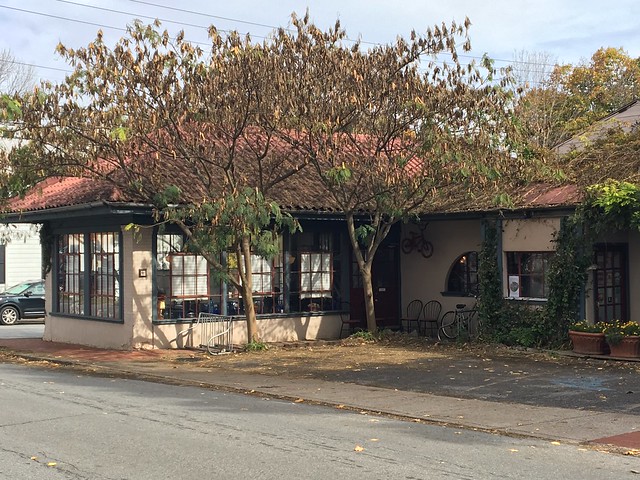
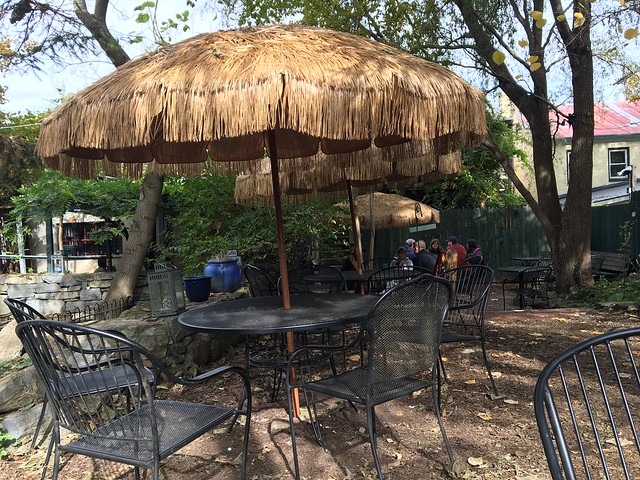
 Blue Moon Cafe is a sweet little cafe with a sprawling outdoor seating area. The menu features sandwiches, salads, quiche, soups and desserts.
 I immediately started looking at the sandwiches, and there are so many - and lots of vegan options, as well. Some of the ones I was deciding between are:
The Pilgrim | $9
maple lawn free range smoked turkey breast oven heated with brie on a ciabatta roll & topped with our cranberry aioli
The Gobbler. | $9
local free range turkey, bacon, provolone and Russian dressing heated on a kaiser roll
The Apple-acian | $8
baked granny smith apple, brie cheese, red onion and dijon mustard on ciabatta bread
Meatball Hoagie | $9
succulent meatballs and marina baked in our oven with mozzarella on a baguette
Triple B | $10
our chubby with brie, bacon, French fried onions, lettuce, tomato, & mayo with fries (ADD ON)
Chicken breast | $3 Smoked Turkey | $ 3 Avocado | $2
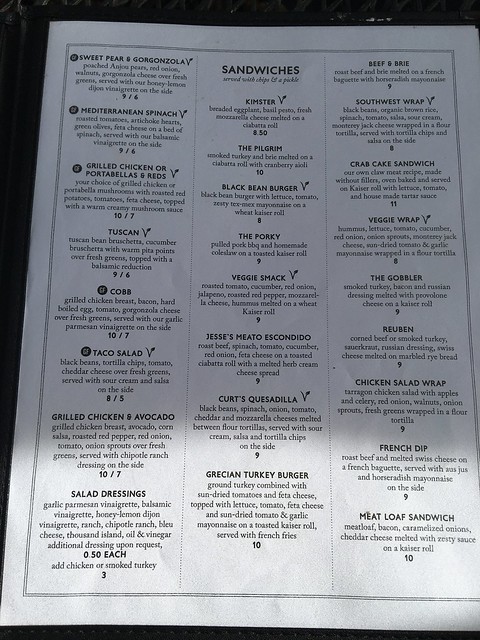 I ultimately went with The Pilgrim. And a side of macaroni and cheese. :)
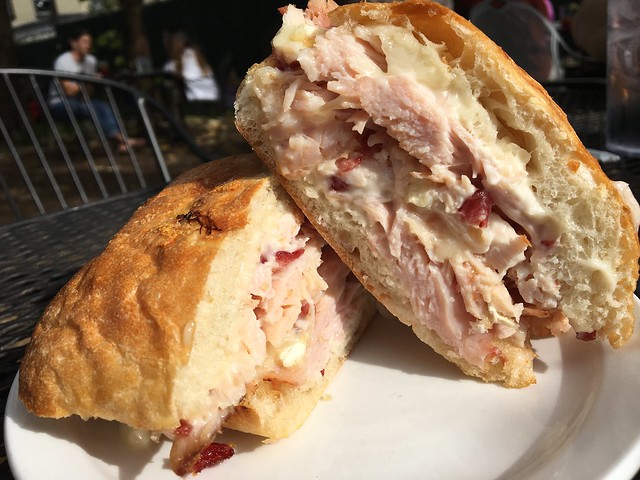 Everything about this was delicious. The ciabatta was fresh and had a perfect crunch to the outside, the brie was melting all over turkey breast, and the cranberry aioli added the touch of sweetness I needed.
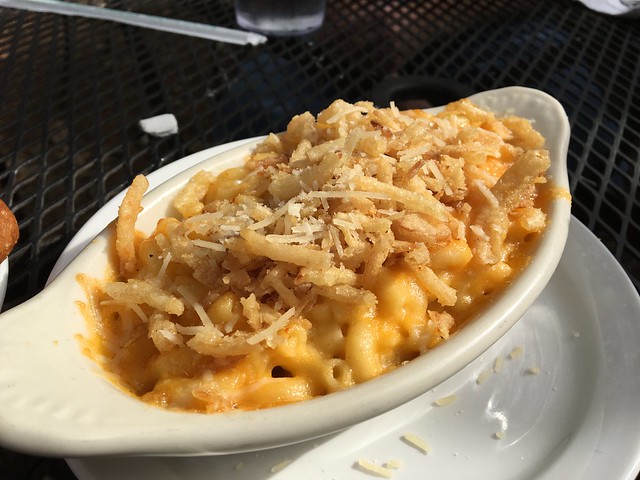 The macaroni and cheese was creamy, cheesy and crunchy with the french-fried onions on top. Perfect, perfect lunch.
Grade: A

0 comments